 Updated:09:14 PM CEST Jun,03
(new)
Updated:09:14 PM CEST Jun,03
(new)

66 lottery login
91 club
okwin
bdg game
55 club

(c) 1998-2026 Gameguru Mania
Privacy Policy statement
|
Nvidia's GeForce GTX 980/970 graphics cards tested - tech|
| (hx) 09:32 PM CEST - Sep,20 2014 | 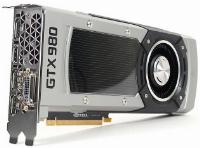 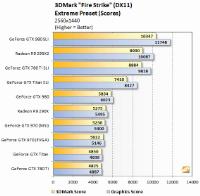 Starting at a way more reasonable $549, the GTX 980 also only has 5.2 billion transistors-far fewer than the 7.1 billion you'd find in a current-gen GTX 780 Ti or GTX Titan-and its 2048 CUDA cores and 256-bit memory interface wouldn't seem to stack up well against the 2880 cores and 384-bit bus you'd find in the company's former 780 Ti flagship. Indeed, it doesn't have quite the same texture fill rate and there's a good bit less memory bandwidth. But the new Maxwell-based GPU inside this card is clocked at a practically unheard-of 1126 MHz (compare to 875MHz), the card has 4GB of GDDR5 memory (up from 3GB), and most impressively the entire kit runs at just 165 watts TDP. Only!
HotHardware: The 4GB of video memory on both cards
is clocked at a blisteringly-fast 7GHz (effective GDDR5 data rate) and
the memory links to the GPU via a wide 256-bit interface. At those
clocks, the GeForce GTX 980 offers up a peak textured fillrate of 144.1
GTexels/s and 224 GB/s of memory bandwidth; the GTX 970 offers a peak
textured fillrate of 109.2 GTexels/s and the same amount of memory
bandwidth. Those numbers might seem low in light of the GeForce GTX 780
Ti's 384-bit memory interface, 210 GTexels/s and 336 GB/s of memory
bandwidth, but stick with us here-we'll have more to share on the next
couple of pages. Like the high-end cards in the GeForce GTX 700 series,
the new GeForce GTX 980 and GTX 970 reference cards are outfitted with
heavy-duty coolers and frames made of aluminum to add rigidity. The GTX
980 also has an aluminum back-plate, which aids in cooling. And what's
interesting about it is that there's a removable panel that allows for
better air-flow between cards, should a system be packing multiple
cards, close together. NVIDIA claims they've done some testing in this
regard, and removing that portion of the back-plate is all that's
necessary to improve air-flow into an adjacent card's fan. The GeForce
logo along the top edge of the cards also light up and there are
embossed badges at the front of the fan shroud with the cards' model
number. For the most part, the GeForce GTX 980 and 970 reference cards,
look very much like the 700 series.
TechSpot: Nvidia says Maxwell brings 2x the
performance per watt over the previous generation. For example, the GTX
980 has 33% more cores that also operate at a higher frequency than the
GTX 680, yet the newer card's TDP rating is 30 watts lower. Nvidia says
that the GTX 980's GM204 GPU is so efficient due to rebalancing the
design to fully utilize the CUDA cores more often. Additionally, they
have increased the cache size to 2MB, which is four times larger than
the 512KB cache found inside the GK104 used by GPUs such as the GTX 680
and GTX 770. The larger cache means fewer requests to the GPU DRAM are
needed, improving performance and reducing the GPUs power consumption.
Speaking of DRAM, the GM204 features a new compression engine which is
designed to further reduce the bandwidth demands.
TechReport: By either measure, the GeForce GTX 980
is the fastest single-GPU graphics card we tested. With the possible
exception of the pricey Titan Black, it's also the fastest single-GPU
graphics card on the planet. Although $549 is a lot to pay, the GTX 980
manages to deliver appreciably better value than the GeForce GTX 780
Ti, which it replaces. The new GeForce flagship outperforms AMD's
Radeon R9 290X, as well. If you want the best, the GTX 980 is the card
to get.That's an assessment based on price and performance, but we know
from the preceding pages that the GTX 980's other attributes are
positive, too. The GM204 GPU's power efficiency is unmatched among
high-end GPUs. With Nvidia's stock cooler, that translates into lower
noise levels under load than any older GeForce or current Radeon in
this class. I'm also quite happy with the suite of extras Nvidia has
built into the Maxwell GPU, such as DSR for improved image quality and
a big ROP count for high performance at 4K resolutions. This graphics
architecture takes us a full generation beyond Kepler-and thus beyond
what's in current game consoles like the PlayStation 4 and Xbone.
TechPowerUp: In terms of pure performance, we find
the GeForce GTX 980 exceeding the GeForce GTX 780 Ti by 7%, which
doesn't look huge, but consider that the GM204 has nearly 2 billion
fewer transistors and about a 50% lower TDP, and something tells us
that the GM204 won't be the biggest chip NVIDIA will design on this
architecture. Compared to AMD's Radeon R9 290X, we see a large
performance gap of up to 20% at 1920x1080, although it shrinks to 10%
at higher resolutions. This makes the GTX 980 an excellent choice for
beyond-HD gaming, but you should still have two cards running in SLI
for 4K. When looking at performance, you also have to consider power
consumption. Nowadays, power consumption is the limiting factor for GPU
performance because heat and noise follow power consumption, and you
can only cool so much heat in a graphics card while keeping it as quiet
as possible. We got a first glimpse of Maxwell's superior energy
efficiency with the GTX 750 Ti it debuted with, and NVIDIA has
successfully managed to bring those improvements to their high-end
product. The GTX 980 only uses 156 W on average in our power
consumption tests, which is incredibly low for a card of this
performance class. AMD's recently released "Tonga" GPU, based on their
latest technology, sips 50 W more for only roughly half the
performance. Unlike AMD, NVIDIA has also improved non-gaming power
consumption of their board, which will be important to productivity
users who run their PC all day long. NVIDIA was also able to reduce
noise levels of their card considerably because of these power
consumption improvements, making gaming on it a quiet experience. With
34 dBA, the card is very quiet for its performance class, but I still
see some headroom to reduce noise, which board partners will certainly
capitalize on.
PCPerspective: The performance of the GeForce GTX
980 is impressive, but doesn't quite mix-up the high end market as some
people might have thought it would a year or so ago. My experiences
gaming with the GTX 980 proved it was the best single GPU graphics card
you can get today; better than the GTX 780 Ti, better than the Titan
Black, and better than the Radeon R9 290X. Benchmarks and real-world
game play proved that to be true: the GTX 980 was as much as 15% faster
than the R9 290X and was only beaten by the AMD flagship card in one of
our six games. The GTX 780 Ti falls into the same path as the R9 290X -
faster in only a single competition (Skyrim) against the newest member
of the GeForce family. The GTX 970 might be a better overall package if
you include pricing, but it's performance is also worth noting again.
For just $329 it is able to outperform AMD's Radeon R9 290 and the
GeForce GTX 780. And again, that advantage is up to 15%, and comes in a
dead heat in a couple of cases. What makes these wins for the GTX 980
and GTX 970 so impressive is not the scale or ratio by which they
outperform the R9 290X or GTX 780 Ti, but that it is being done on
fairly modestly pressed silicon. Keep in mind that the GTX 780 Ti has
2880 CUDA cores, while the GTX 980 has 2048. The GTX 780 Ti has a
384-bit memory bus, the GTX 980 a 256-bit bus. The GTX 780 Ti has a 250
watt TDP, the GTX 980 only 165 watts. The GTX 780 Ti launched for $699
last November, the GTX 980 launches at $549.
|
|
last 10 comments:
|
|
)
)
 Add your comment (free registration required)